
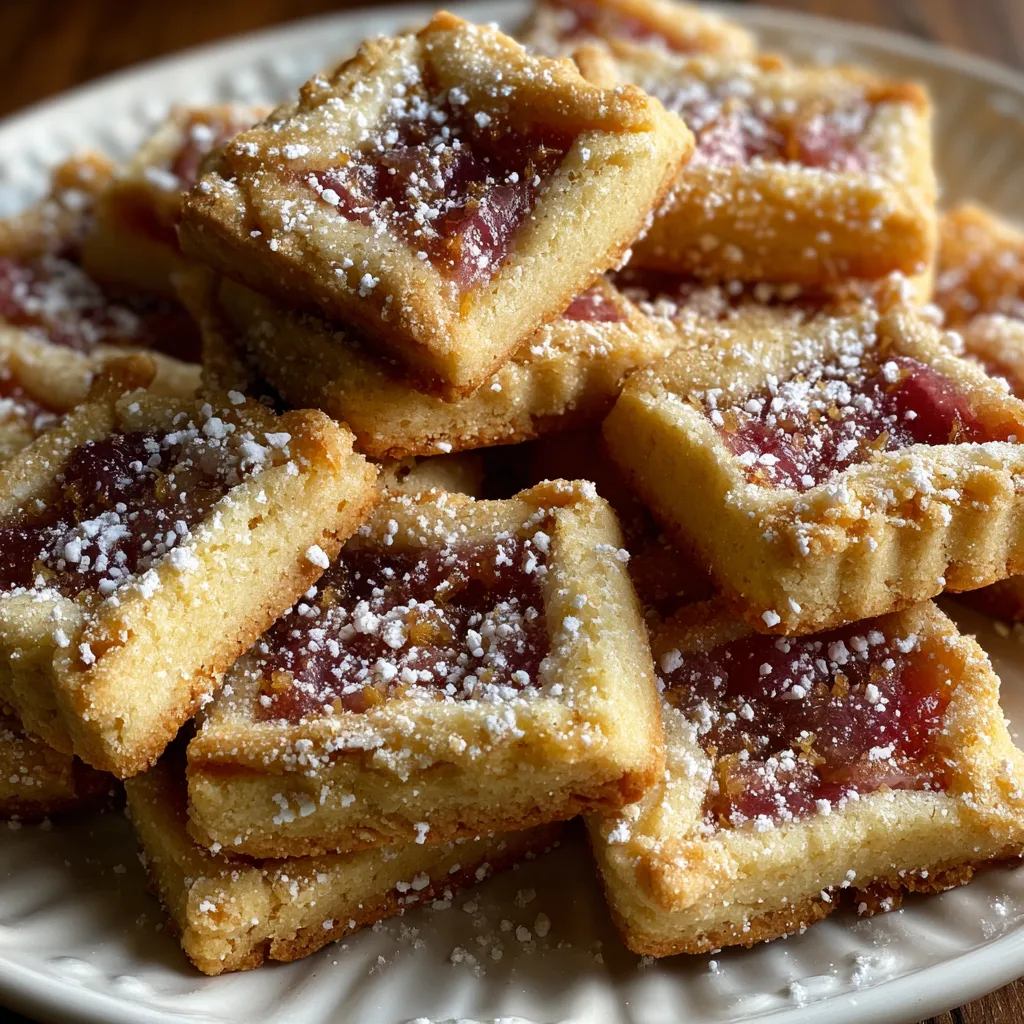
These Buttery Rhubarb Shortbread Cookies bring together flaky, buttery shortbread dotted with tart rhubarb pieces for a bright, tender cookie that melts in your mouth. Crisp pale edges give way to a rich, creamy crumb and juicy pops of garden-fresh rhubarb in every bite. Perfect for summer baking adventures or afternoon tea, this easy beginner-friendly recipe delivers that sweet-and-tangy balance with minimal fuss. Grab your mixing bowl and let’s turn a handful of simple ingredients into your new favorite fruity treat!
To whip up these cookies, you’ll need a handful of pantry staples and vibrant rhubarb—simple ingredients that come together for big flavor.
Let’s walk through turning these pantry staples and fresh rhubarb into irresistible shortbread cookies. With straightforward steps—mixing, folding, chilling, and baking—you’ll see how easy it is to achieve those crisp pale edges and tender centers dotted with juicy rhubarb pieces. Follow along, and soon your kitchen will be filled with visions of sweet, tart bites ready to pop into your mouth.
1. Preheat the oven to 350°F (175°C) and line a baking sheet with parchment paper to ensure even baking and easy cleanup.
2. In a large bowl, whisk together the 2 cups of all-purpose flour, 1/2 cup powdered sugar, and 1/4 teaspoon salt until well combined and free of lumps.
3. In a separate bowl, use an electric mixer to beat the softened butter and 2 tablespoons granulated sugar on medium speed until the mixture turns light in color and creamy, about 2–3 minutes.
4. Stir in 1 teaspoon vanilla extract into the butter mixture, mixing just until fully incorporated and aromatic.
5. Place the 1 cup finely chopped rhubarb in a small bowl, sprinkle 1 teaspoon cornstarch over it, and toss gently to coat—this helps remove excess moisture and prevents soggy pockets.
6. Fold the coated rhubarb into the butter-sugar mixture using a spatula, then gradually add the flour mixture in batches, mixing gently until a cohesive dough forms.
7. Transfer the dough onto a lightly floured surface and gently press or roll it out to about 1/2 inch thickness, taking care not to overwork the dough to keep it tender.
8. Use cookie cutters or a sharp knife to cut the dough into your desired shapes, then place the cookies about 1 inch apart on the prepared baking sheet.
9. Chill the cookies in the refrigerator for 20–30 minutes—this step firms the butter, prevents excessive spreading, and ensures crisp edges.
10. Bake for 12–15 minutes, or until the edges begin to show a hint of golden brown, then remove and let the cookies cool on the baking sheet for 5 minutes before transferring to a wire rack.
These Buttery Rhubarb Shortbread Cookies shine on their own, but pairing them thoughtfully can elevate your dessert experience. Whether you’re hosting a garden party, enjoying a quiet afternoon, or packing sweet treats for a picnic, a few simple add-ons and thoughtful presentation touches will make these cookies even more memorable. From complimentary beverages to decorative finishes and creative accompaniments, here are four easy ideas to showcase the buttery crispness and bright rhubarb bursts in style.
Getting these shortbread cookies just right is all about controlling chill time, moisture, and bake time. With a few clever tricks in your back pocket, you’ll nail the perfect texture every time—crispy around the edges, tender in the center, and bursting with juicy rhubarb. Whether you’re prepping dough ahead of time, ensuring the rhubarb doesn’t make the batter soggy, or knowing exactly when to pull your cookies from the oven, these tips will help you bake like a pro without any guesswork. Let’s dive into some friendly advice that guarantees cookie success and endless smiles.
Storing your Buttery Rhubarb Shortbread Cookies correctly keeps them crisp, flavorful, and ready for snacking, whether you’re planning ahead or enjoying them the same day. With the right container and method, you can preserve the delicate texture of the shortbread and the subtle tartness of the rhubarb while preventing any unwanted moisture. Follow these tried-and-true storage strategies to maintain perfect crunch and freshness for days, or freeze for longer-term enjoyment when you want a quick sweet treat. A little planning goes a long way.
Here are some quick answers to common questions about making and enjoying these cookies:
Total time is about 1 hour including active prep, chilling, and baking. You’ll spend 15–20 minutes measuring ingredients, chopping rhubarb, mixing dough, and rolling or shaping cookies. Then chill the shaped cookies for 20–30 minutes. Bake for 12–15 minutes until the edges just turn golden, and allow 10 minutes cooling on the sheet and wire rack before serving.
Yes, you can use frozen rhubarb. Thaw it completely and drain on paper towels, then toss with the teaspoon of cornstarch to absorb excess moisture. Pat it as dry as possible before folding into the dough. You may want to reduce the added granulated sugar by a teaspoon if your frozen rhubarb is sweeter or more concentrated.
For uniform rounds, form the dough into a log about 2 inches in diameter on a lightly floured surface, wrap it tightly in plastic wrap, and refrigerate or freeze for 20–30 minutes (or up to one month in the freezer). Slice the log into ¼-inch discs and place on parchment. If you prefer cut-out shapes, roll the dough to ½-inch thickness between two sheets of parchment, cut, then transfer the cutouts to the sheet. Chilling prevents spread and yields crisp edges.
Make sure the rhubarb is patted completely dry after tossing with cornstarch. Overmixing can develop gluten and stiffen shortbread, so fold the flour in gently until just combined. Chill the shaped dough before baking to solidify butter and limit spread. Bake until the edges are barely golden, then remove promptly to keep the centers tender and prevent excess moisture build-up.
The cookies are done when the edges show a hint of golden brown while the center remains pale. They should feel set but still soft in the middle. Check at 12 minutes; if they’re still very pale and doughy, bake an additional 2–3 minutes, watching closely to avoid overbaking. They firm up as they cool.
Unbaked dough logs can be wrapped in plastic wrap and frozen for up to one month. Slice and bake directly from frozen, adding an extra minute or two to baking time. Baked cookies store in an airtight container at room temperature for up to three days. For longer storage, layer them between parchment in a freezer bag and freeze for up to two weeks; thaw at room temperature before serving.
You can swap half of the all-purpose flour with whole wheat pastry flour for a slightly nuttier flavor, or use gluten-free 1:1 flour blend. Replace the vanilla extract with almond or orange extract for a flavor twist. Swap up to 2 tablespoons of powdered sugar for light brown sugar for a hint of caramel. If you prefer a less tart cookie, reduce the rhubarb to ¾ cup and increase cornstarch by ½ teaspoon.
These cookies really steal the show by combining classic, melt-in-your-mouth shortbread with the zingy pop of garden-fresh rhubarb. The secret is in the simple balance—rich butter, delicate sugar, a touch of vanilla, and just enough rhubarb to brighten every bite. It’s a foolproof recipe that works for bakers of any skill level, delivers stunning results, and comes together with minimal fuss. Feel free to print and save this recipe for your next baking session, then drop a comment below or share your tips if you give it a whirl—we love hearing about your kitchen adventures!
These shortbread cookies bake up with a crisp, pale edge and a glow of tart rhubarb that bursts against a rich, creamy crumb. Each bite offers a flaky crunch followed by a juicy pop of garden-fresh flavor.

Hey there, kitchen adventurers! I'm Annie Parker, and welcome to my cozy corner of the internet where homestyle cooking meets creative twists, and every recipe is designed to make your life a little more delicious.