
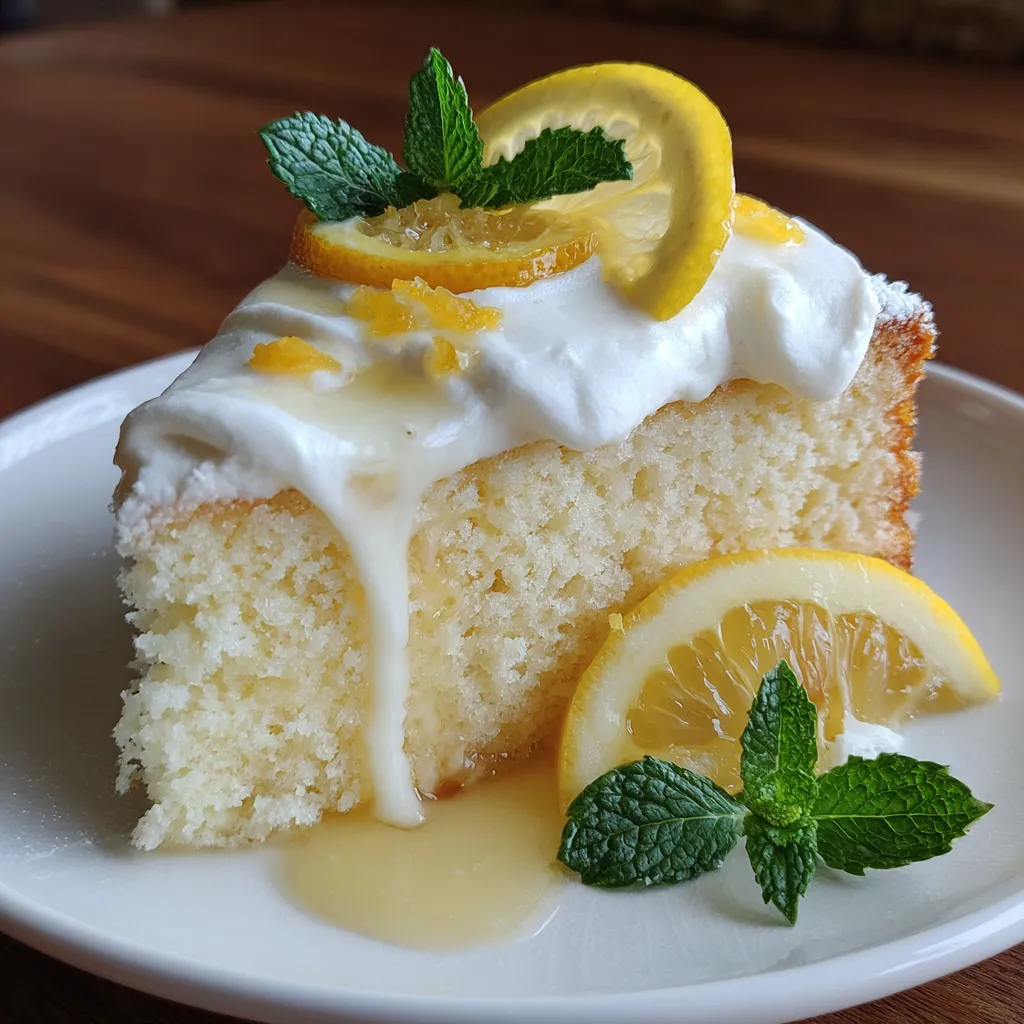
Get ready to fall in love with this Creamy Lemon Cheesecake Cake, where bright lemon zest lifts moist sponge layers, nestled around a creamy cheese center and crowned with silky lemon buttercream that melts on your tongue with every citrusy bite. Whether you’re hosting a spring gathering or craving a zesty treat, this recipe will guide you step by step to bake, assemble, and frost your dream dessert.
Gather these simple ingredients to build each layer of your show-stopping cake:
Follow these steps to bake, layer, and frost your Lemon Cheesecake Cake like a pro. From prepping pans to piping frosting, each detail brings you closer to that perfect balance of tender sponge, tangy filling, and buttery icing—ready in just a few easy phases.
1. Preheat the oven to 350°F (175°C) and grease and flour two 9-inch round cake pans to ensure easy release.
2. In a large mixing bowl, cream together the softened butter and granulated sugar until light and fluffy, about 3–4 minutes with a mixer.
3. Add the eggs one at a time, mixing well after each addition. Stir in the vanilla extract and lemon zest until evenly distributed.
4. In a separate bowl, whisk together the flour, baking powder, baking soda, and salt for a uniform dry mix.
5. Gradually add the dry ingredients to the butter mixture, alternating with the buttermilk. Begin and end with the dry ingredients, mixing until just combined.
6. Divide the batter evenly between the prepared cake pans and smooth the tops with a spatula for even baking.
7. Bake for 25–30 minutes, or until a toothpick inserted in the center comes out clean. Allow the cakes to cool in the pans for 10 minutes before transferring to wire racks to cool completely.
8. While the cakes cool, prepare the cream cheese filling: in a medium bowl, combine softened cream cheese, powdered sugar, lemon juice, vanilla extract, and lemon zest. Beat until smooth and creamy.
9. Once cooled, place one cake layer on a serving plate and spread the cream cheese filling evenly over the top.
10. Position the second cake layer on top of the filling, pressing gently to secure.
11. For the lemon frosting, beat the softened butter until creamy. Gradually add powdered sugar, mixing until fully incorporated. Add lemon juice, lemon zest, vanilla extract, and a pinch of salt. Beat until light and fluffy.
12. Use the lemon frosting to cover the top and sides of the cake with an offset spatula for a smooth finish.
13. If desired, garnish with lemon slices and fresh mint leaves before serving.
This cake shines on its own, but these serving ideas take it to the next level:
Nailing this cake is all about balance: don’t overmix the batter, chill your layers properly, and taste as you go when adding zest and juice. A chilled filling prevents seepage, and gentle folding ensures that sponge layers stay light. Follow the timing for cooling and frosting so each component holds its shape beautifully on the plate.
Proper storage keeps your cake tasting fresh and vibrant. Whether you’re saving leftovers or prepping layers ahead of time, follow these guidelines to maintain flavor and texture:
Got questions? Here are quick answers to the most common baking curiosities:
A: Preparation takes about 30 minutes, which includes creaming butter and sugar, mixing dry and wet ingredients, and making the cream cheese filling and frosting. Baking the two cake layers takes 25–30 minutes in the preheated 350°F oven. Allow an additional 10 minutes for the cakes to cool in the pans, plus about 30 minutes to assemble, frost, and garnish—bringing the total to around 1 hour 30 minutes.
A: Yes. To mimic the acidity and tenderness of buttermilk, combine 1 cup of milk with 1 tablespoon of lemon juice or white vinegar. Let it sit for 5–10 minutes until slightly curdled, then use it in place of the 1 cup of buttermilk. This preserves the cake’s moist crumb and helps activate the baking soda.
A: Chill both cake layers until they’re completely cool before filling. Ensure the cream cheese mixture is well chilled as well—beat it until smooth, then refrigerate for 15–20 minutes. This firms up the filling so it stays put between the layers. You can also pipe a thin ring of chilled frosting around the edge of the bottom layer to act as a barrier before spreading the cream cheese filling.
A: Absolutely. The cake layers can be baked and wrapped tightly in plastic wrap up to 24 hours in advance; store them at room temperature. The cream cheese filling and lemon frosting can also be made a day ahead, chilled in airtight containers. Bring fillings to room temperature and rewhip briefly before assembling and frosting to restore their smooth texture.
A: For more lemon punch, increase the zest in both the cake batter and the cream cheese filling by an additional teaspoon each. You can also add an extra tablespoon of lemon juice to the frosting. To reduce intensity, use less zest or reduce the juice by half. Taste the frosting and filling as you go to achieve your preferred balance of tartness and sweetness.
A: Store the assembled cake in an airtight cake container or cover it loosely with plastic wrap and keep it in the refrigerator. It will stay fresh for up to 4 days. Before serving, let slices sit at room temperature for 15–20 minutes to soften the frosting and bring out the flavors.
A: You can freeze unfrosted cake layers for up to 2 months. Wrap each layer in plastic wrap and place in a freezer bag or airtight container. Thaw in the refrigerator overnight before bringing to room temperature and frosting. Freezing a fully assembled cake is not recommended, as the frosting and filling textures may become grainy upon thawing.
A: Substituting low-fat or Neufchâtel cream cheese will yield a slightly softer, less rich filling. To compensate, ensure the filling is well-chilled before assembly and consider adding 1–2 tablespoons more powdered sugar to help stabilize its texture. Mixing in a teaspoon of cornstarch can also help achieve a firmer consistency.
This Creamy Lemon Cheesecake Cake works its magic by combining a light, zesty sponge with a tangy cream cheese swirl and ultra-silky lemon buttercream that practically melts on your tongue. The contrast of textures and bright citrus notes keeps every bite exciting—and it’s totally printable so you can save it for your next bake-off. If you give it a whirl, drop a comment below with your tips, questions, or just to brag about how many slices you polished off!
Tart lemon and sweet cream cheese swirl between tender cake layers, finished with silky lemon buttercream that melts on your tongue with every bright, citrusy bite.

Hey there, kitchen adventurers! I'm Annie Parker, and welcome to my cozy corner of the internet where homestyle cooking meets creative twists, and every recipe is designed to make your life a little more delicious.