
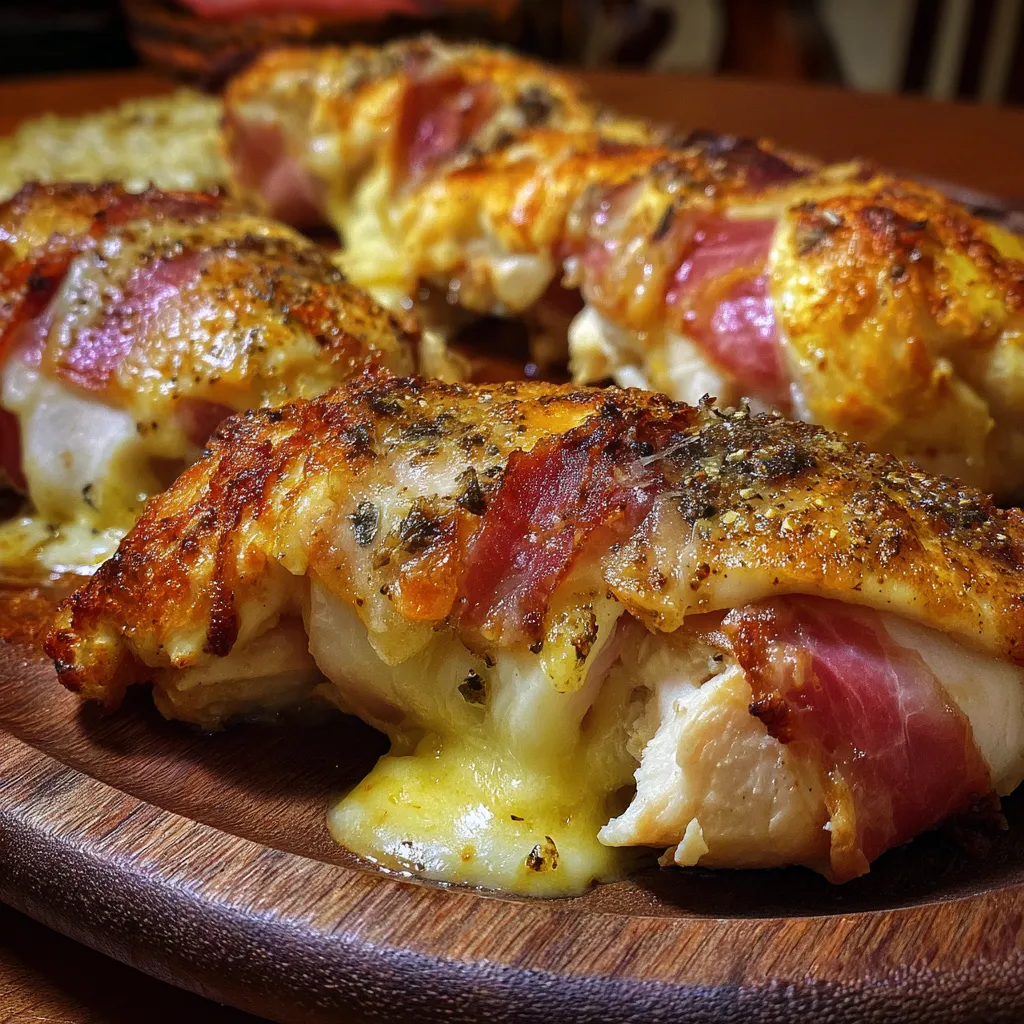
If you’re craving a dinner that feels both comforting and a little indulgent, Pechugas de pollo rellenas de jamón y queso will hit the spot. Chicken breasts envelop ham and oozy Emmental, breaded and baked to a crisp-golden finish—each slice bursts with molten cheese and savory juices, all kissed by paprika and garlic. This intermediate‐level recipe brings restaurant flair straight to your kitchen without any fuss, and it’s guaranteed to turn leftover ingredients into your new favorite family classic.
To make these stuffed chicken breasts shine, you’ll need a handful of pantry staples and fresh proteins. Each component plays a vital role in building layers of flavor and texture.
Let’s walk through turning simple ingredients into a cheesy, satisfying dinner. You’ll prep, season, fill, bread, fry, and bake—each step builds flavor and texture. Keep your workspace organized and the chicken at room temperature for the best results.
1. Precalentar el horno a 180°C y preparar una bandeja de hornear ligeramente engrasada. Esto garantiza que las pechugas se cocinen de manera uniforme y no se peguen.
2. Aplastar ligeramente las pechugas con un mazo de cocina hasta que queden de grosor uniforme. Coloca cada pieza entre dos papeles de hornear para evitar desgarros.
3. Condimentar cada pechuga con sal, pimienta, pimentón dulce y ajo en polvo por ambos lados, asegurando una capa de sabor que penetra bien la carne.
4. Sobre cada pechuga colocar una loncha de jamón York y una de queso Emmental, luego doblar o enrollar la pechuga y asegurar con palillos para mantener el relleno en su sitio.
5. Pasar cada rollo primero por harina, luego por huevo batido y finalmente por pan rallado, cubriéndolo completamente y presionando ligeramente para que el empanado se adhiera.
6. Calentar el aceite de oliva en una sartén a fuego medio y dorar las pechugas por todos los lados durante 4–5 minutos, hasta que el empanado tenga un color dorado intenso.
7. Transferir las pechugas doradas a la bandeja y hornear durante 15–20 minutos o hasta que el interior esté bien cocido y el termómetro marque 75 °C.
8. Retirar del horno, quitar los palillos con cuidado y dejar reposar unos minutos antes de cortar para que los jugos se redistribuyan.
9. Servir caliente acompañadas de tu guarnición favorita y disfrutar de cada bocado cremoso.
Once these golden rolls come out of the oven, you’ll want to serve them in style. A well-chosen side will highlight the juicy center and crunchy coating, making every plate look like a gourmet treat.
These insights will make your rolls foolproof—no more cheese por todas partes ni empanados que se deshacen.
If you end up with leftovers (o quieres preparar con antelación), aquí van algunos trucos para mantener la textura y el sabor intactos.
Here are quick answers to the most common dudas—let me know if you have más preguntas!
The total time is about 45–60 minutes. Preparation takes roughly 20–25 minutes (flattening the chicken, seasoning, assembling and breading), pan‐frying takes 4–5 minutes per roll to achieve a golden crust, and baking in a 180 °C oven takes 15–20 minutes until fully cooked.
Yes. You can replace Emmental with mozzarella, cheddar or any melty cheese you prefer. For the ham, you can use prosciutto, serrano ham or even a thin slice of smoked turkey. Just ensure the slices are thin enough to roll smoothly within the chicken.
Carefully pound the breasts to an even, thin thickness without tearing. After placing the ham and cheese, roll tightly and secure with toothpicks. Work gently when dredging in flour, egg and breadcrumbs, pressing lightly so the coating adheres without pulling the chicken apart.
Use a meat thermometer inserted into the thickest part of the roll; it should read 75 °C (165 °F). If you don’t have a thermometer, pierce with a skewer or knife—the juices should run clear with no pink, and the cheese interior should be melted.
Make sure each roll is evenly coated first in flour (shake off excess), then in beaten egg, and finally in pan rallado, pressing gently. Let the breaded rolls rest on a tray for a few minutes before frying to allow the layers to set. Also, avoid overcrowding the pan so they can brown evenly without shifting.
You can bake at 180 °C for about 25–30 minutes, but you may lose some crispness. For a golden exterior without frying, brush the rolls with a thin layer of olive oil before baking and flip halfway through cooking to promote even browning.
Store cooled rolls in an airtight container in the refrigerator for up to 2 days. To reheat, preheat the oven to 170 °C, place rolls on a baking sheet, and warm for 10–12 minutes until heated through. This preserves the crisp coating better than a microwave.
They go great with a fresh green salad dressed with vinaigrette, creamy mashed potatoes, steamed vegetables (broccoli, carrots or green beans), or a light rice pilaf. The mild paprika and garlic seasoning also complement roasted root vegetables.
This recipe works because it combines familiar ingredients—chicken, ham and cheese—in a simple assembly that feels gourmet. The double cooking (sear then bake) seals in juiciness and guarantees a crunchy crumb, while paprika and garlic add a subtle spark. It’s playful, homey and just the kind of dish you’ll want to print and stash in your recipe binder. Drop a comment if you try it or have any dudas—your kitchen victories and questions always brighten my day!
Warm aromas of paprika and garlic welcome you as tender chicken rolls emerge from the oven, their golden crust giving way to melted Emmental and smoky ham in every juicy bite.

Hey there, kitchen adventurers! I'm Annie Parker, and welcome to my cozy corner of the internet where homestyle cooking meets creative twists, and every recipe is designed to make your life a little more delicious.