

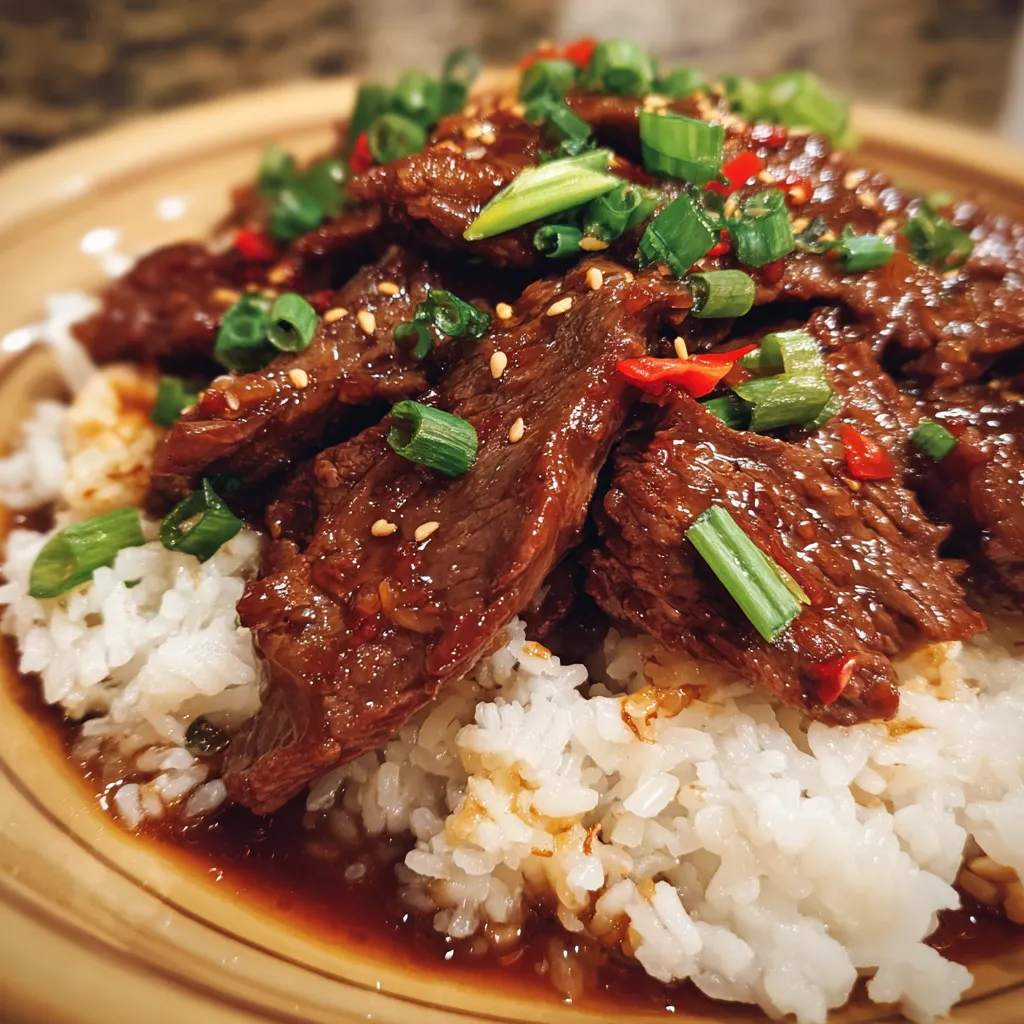
Tender strips of beef simmer in a glossy sweet-and-savory sauce, kissed by garlic and ginger, and slow-cooked until melt-in-your-mouth tender. This Crockpot Mongolian Beef delivers succulent flank steak glazed in a caramelized soy-brown sugar blend with a hint of heat—perfect for busy weeknights or weekend feasts. It’s the ultimate comfort food that practically cooks itself while you tackle life’s to-do list, then rewards you with irresistible, spoonable goodness over steamed rice. Ready to dive in?
Key Ingredients
To make this Crockpot Mongolian Beef, you only need a handful of pantry staples and fresh aromatics that come together to create its signature sweet, salty, and slightly spicy flavor profile.
- 2 pounds flank steak, sliced against the grain into thin strips: Tender cuts that soak up the glossy sauce and stay juicy after slow cooking.
- 1/2 cup soy sauce: Provides a savory, umami-rich base that deepens the flavors.
- 1/2 cup brown sugar: Adds a caramel sweetness that balances the saltiness of the soy.
- 1/4 cup water: Helps dissolve the sugar and blend the sauce ingredients seamlessly.
- 2 tablespoons cornstarch: Mixed into a slurry to thicken the sauce into a silky glaze.
- 2 tablespoons vegetable oil: Used for searing the steak, locking in flavor and color.
- 6 cloves garlic, minced: Delivers pungent aromatics and depth to every bite.
- 1 teaspoon minced ginger (fresh or ground): Brings warmth and a gentle, peppery zing.
- 1/2 teaspoon red pepper flakes (adjust for spice preference): Injects a subtle heat that lingers.
- 4 green onions, chopped (for garnish): Fresh crunch and color to finish each serving.
- Cooked rice, for serving: The perfect canvas for soaking up every drop of sauce.
How To Make Crockpot Mongolian Beef
This recipe takes just a few simple steps: you start by preparing the beef and sauce, sear for extra depth, then let the slow cooker do the rest. By sealing in juices with a quick sear, you’ll elevate the final dish, while the low-and-slow method transforms the flank steak into fork-tender perfection. About half an hour before you’re ready to serve, you’ll thicken the sauce for that signature glossy finish.
1. Slice the flank steak against the grain into 1/4-inch-thick strips to ensure tender bites after cooking.
2. Whisk soy sauce mixture: In a medium bowl, combine soy sauce, brown sugar, and water. Whisk until the sugar fully dissolves into a smooth liquid.
3. Prepare cornstarch slurry: In a small bowl, stir cornstarch with 2 tablespoons of cold water until lump-free—this thickener will give your sauce body.
4. Sear the steak: Heat vegetable oil in a large skillet over medium-high heat. Add steak in batches and sear for about 2–3 minutes per side until browned and caramelized.
5. Transfer the browned beef to the crockpot.
6. Pour the soy-sugar mixture over the beef, then add minced garlic, minced ginger, and red pepper flakes. Stir so each strip is well-coated in the fragrant sauce.
7. Cover and cook on low for 4–6 hours or on high for 2–3 hours until the beef is ultra-tender.
8. About 30 minutes before the end of cooking, stir in the cornstarch slurry. Re-cover and cook until the sauce achieves a glossy, thick consistency.
9. Just before serving, garnish with the chopped green onions for a bright, fresh finish.
10. Serve the Mongolian beef hot over cooked rice, letting the grains soak up every delicious drop of sauce.
Serving Suggestions
Whether it’s a family dinner or you’re meal-prepping for the week, dressing up this dish is easy. With a few simple touches, you’ll create a restaurant-worthy experience right at home.
- Scoop Over Rice: Pile the tender beef and its rich sauce over a mound of hot cooked rice to ensure every grain is coated in flavor.
- Garnish Generously: Sprinkle extra chopped green onions on top for a pop of color and crisp, oniony bite.
- Family-Style Platter: Serve directly from the crockpot at the center of the table so everyone can help themselves to as much sauce as they like.
- Double-Up the Sauce: Keep any extra soy-brown sugar glaze warm in a small bowl for spooning on additional servings.
Tips For Perfect Crockpot Mongolian Beef
Slow cooking is forgiving, but these friendly pointers will help you get restaurant-quality results every time. Keep an eye on your cooking times, taste as you go, and tailor the sweetness and heat to your preferences.
- Flank steak can be substituted with sirloin for a different flavor and texture.
- For a slightly sweeter sauce, increase the amount of brown sugar to suit your taste buds.
- This dish can be made gluten-free by using tamari instead of regular soy sauce.
- Leftovers can be refrigerated and reheated for a quick meal; the flavors often enhance overnight.
How To Store It
Planning ahead? This Mongolian beef holds up beautifully in the fridge or freezer, making it an ideal candidate for batch cooking. Follow these storage methods to maintain the bold flavors and tender texture.
- Refrigerate Properly: Once cooled, transfer leftovers to an airtight container and store in the fridge for up to 4 days.
- Freeze for Longevity: Portion into freezer-safe bags, press out excess air, and freeze for up to 3 months. Thaw overnight in the fridge before reheating.
- Reheat Gently: Warm in a skillet over medium heat with a splash of water or broth to loosen the sauce and revive its gloss.
- Microwave Tip: Cover loosely and heat in 30-second intervals, stirring in between for even heating and moisture retention.
Frequently Asked Questions
Got questions? Here are quick answers to common inquiries about this recipe.
- What is the best way to slice the flank steak for tender results?
To ensure tender bites, place the flank steak on a cutting board and slice against the grain into thin strips about 1/4-inch thick. Cutting against the grain shortens the muscle fibers, making the cooked beef more tender and easier to chew.
- Can I skip searing the beef and still get good flavor?
While you can skip searing, browning the beef in a hot skillet for 2–3 minutes per side adds a rich caramelized flavor and improves texture. If you’re short on time, sear in larger batches or use a high-heat setting on an electric skillet before transferring to the crockpot.
- How do I know when the sauce has thickened enough?
After stirring in the cornstarch slurry about 30 minutes before the end of cooking, watch the sauce bubble and coat the beef. It should cling slightly to the meat and spoon off the back of a spoon in a thick ribbon. If it’s still thin, cook uncovered on high for 5–10 more minutes until you reach the desired consistency.
- What are some gluten-free and low-sugar modifications for this recipe?
For a gluten-free version, substitute tamari or coconut aminos for soy sauce. To reduce sugar, swap brown sugar for a sugar substitute like coconut sugar or a monk fruit blend, and taste as you go to maintain the balance of sweet and savory.
- How should I store leftovers, and how long will they last?
Store cooled leftovers in an airtight container in the refrigerator for up to 4 days. When reheating, add a splash of water or broth and warm gently in a skillet over medium heat or in the microwave to restore moisture and sauce consistency.
- Is it possible to cook this entirely on high or low, and how do times differ?
Yes. On low, cook for 4–6 hours for maximum tenderness. On high, cook for 2–3 hours. If you prefer firmer beef with a bit more bite, stick to the lower end of each range, but always check for fork-tenderness before adding the cornstarch slurry.
- Can I add vegetables to the crockpot, and if so, which ones work best?
You can add veggies like sliced bell peppers, thinly sliced carrots, or snow peas. Add hearty vegetables (carrots, bell peppers) at the start so they cook through, and delicate ones (snow peas) during the last 30 minutes to prevent over-softening.
What Makes This Special
This Crockpot Mongolian Beef works because it combines a simple sear with slow cooking, creating an ultra-tender steak drenched in a irresistibly glossy sauce. The balance of sweet brown sugar, savory soy, and aromatic garlic-ginger zing makes every bite pop with flavor. It’s foolproof comfort food that’s ready whenever you are—feel free to print this recipe and stash it in your cookbook for rainy days or hectic weeknights. If you try it, let me know how it went or drop any questions below—I love hearing your feedback!

Crockpot Mongolian Beef
Description
Succulent flank steak simmers in a caramelized soy-brown sugar glaze, with zingy garlic, ginger, and a hint of heat. Slow-cooked until ultra-tender, it’s perfect spooned over steamed rice.
Ingredients
Instructions
-
Begin by slicing the flank steak against the grain into thin strips. Aim for about 1/4-inch thickness to ensure tender bites after cooking.
-
In a medium bowl, combine the soy sauce, brown sugar, and water. Whisk until the brown sugar is fully dissolved.
-
In a small bowl, mix the cornstarch with a couple of tablespoons of cold water to create a slurry. This will help thicken the sauce later.
-
Heat the vegetable oil in a large skillet over medium-high heat. Once hot, add the sliced flank steak in batches, searing until browned on all sides. This should take about 2-3 minutes per side.
-
Transfer the browned beef to the crockpot.
-
Pour the soy sauce mixture over the beef in the crockpot. Then add the minced garlic, minced ginger, and red pepper flakes. Stir to ensure the beef is well-coated in the sauce.
-
Close the lid of the crockpot and cook on low for 4-6 hours, or on high for 2-3 hours, until the beef is tender.
-
About 30 minutes before the end of cooking, stir in the cornstarch slurry. This will help thicken the sauce. Re-cover and continue cooking until the sauce has thickened to your liking.
-
Just before serving, garnish the dish with chopped green onions.
-
Serve the Mongolian beef hot over cooked rice, allowing diners to soak in the delicious sauce.
Note
- Flank steak can be substituted with sirloin for a different flavor and texture.
- For a slightly sweeter sauce, increase the amount of brown sugar.
- This dish can be made gluten-free by using tamari instead of regular soy sauce.
- Leftovers can be refrigerated and reheated for a quick meal; the flavors often enhance overnight.

