

Duck A L’Orange brings together crisp-skinned duck bathed in tangy-sweet orange reduction, marrying rich meat with bright citrus notes. Roasted until the skin crackles, each slice is laced with a glossy orange sauce that balances honeyed sweetness and bright acidity, with hints of Grand Marnier warming the palate. This classic French cuisine favorite is perfect for an intermediate home cook looking to impress at dinner. Get ready to revel in every zesty, savory bite and turn your next meal into a celebration of flavors!
Key Ingredients
Before you dive in, let’s gather everything you need for this Duck A L’Orange.
- 1 whole duck (about 2 kg): The star of the show—rich, flavorful meat with skin that crisps beautifully.
- 2 unit oranges: Provide fresh zest and juice for that signature citrus brightness.
- 1 cup orange juice: Forms the tangy base of the glossy reduction sauce.
- 1 tablespoon orange zest: Intensifies the orange aroma and adds a burst of citrus oils.
- 1/2 cup granulated sugar: Caramelizes into a light amber hue, giving the sauce its honeyed sweetness.
- 1/4 cup white vinegar: Balances the sweetness with bright acidity for a well-rounded sauce.
- 1/4 cup chicken stock: Adds depth and savory umami to the citrus glaze.
- 1 tablespoon cornstarch: Thickens the sauce to that perfect velvety consistency.
- 2 tablespoons water: Helps form a smooth cornstarch slurry to avoid lumps.
- 1 tablespoon unsalted butter: Enriches the sauce, giving it a glossy finish and silky texture.
- 1 teaspoon kosher salt: Enhances all the flavors and seasons the duck evenly.
- 1/2 teaspoon black pepper: Adds a gentle heat and aromatic kick.
How To Make Duck A L’Orange
Bringing together roasting and sauce-making, this recipe is a delightful journey in the kitchen. You’ll start by crisping the duck skin to perfection while simultaneously crafting a luscious orange reduction. Follow each step closely to ensure your bird roasts evenly and your sauce develops that signature balance of sweet, tangy, and savory notes.
1. Preheat oven to 375°F (190°C). Ensure the oven reaches temperature before you begin roasting so the duck cooks evenly from the start.
2. Pat the duck dry and season evenly inside and out with salt and pepper. Removing moisture helps the skin crisp up, while an even seasoning ensures balanced flavor.
3. Place the duck breast-side up on a rack in a roasting pan and roast for about 1 hour 30 minutes until the skin is crisp and the internal temperature reaches 165°F (74°C). Positioning on a rack allows hot air to circulate and fat to drip away for extra crunch.
4. While the duck roasts, zest and juice the oranges to measure out the orange zest and juice. Work over a bowl to catch all the juice and avoid missing any flavorful bits.
5. In a small saucepan over medium heat, combine the sugar and white vinegar, stirring until the sugar dissolves and the mixture turns a light amber color. Watch closely to prevent burning—this is the caramel base of your sauce.
6. Carefully add the orange juice and chicken stock, whisking to deglaze the pan, then bring to a gentle simmer. Use a flat whisk or wooden spoon to scrape up any caramel bits stuck to the pan for extra flavor.
7. Mix the cornstarch with water to form a slurry, stir it into the sauce, and simmer until the sauce thickens slightly. This step takes about 2–3 minutes; stir constantly to keep the texture smooth.
8. Remove the pan from heat and whisk in the butter until melted and the sauce is glossy, then stir in the orange zest. The butter enriches the sauce, giving it a shiny, velvety finish.
9. Let the duck rest for 10 minutes after roasting, carve, and serve with the orange sauce spooned over the top. Resting locks in the juices so every slice stays moist and flavorful.
Serving Suggestions
Ready to plate? Here are a few ways to elevate your Duck A L’Orange presentation:
- Serve slices of duck on warmed plates and spoon the orange reduction generously over the top for a dramatic, restaurant-quality finish.
- Pair with buttery mashed potatoes to soak up every drop of sauce—perfect for those who love a rich, comforting side.
- Add a side of sautéed green beans almondine for crunch and a pop of color that complements the citrus glaze.
- Garnish with a few fresh orange segments and a sprig of thyme to highlight the bright flavors and add visual appeal.
Tips For Perfect Duck A L’Orange
A few friendly pointers can turn a great dish into an unforgettable one. See how tiny tweaks from the notes below can make all the difference!
- Prick the duck skin gently before roasting for extra crispiness. This lets excess fat escape, so the skin crackles.
- A splash of Grand Marnier can be added to the sauce for deeper orange flavor—stir it in just after whisking in the butter.
- Store any leftover sauce in the refrigerator for up to three days in an airtight container, then reheat gently over low heat.
- Adjust the sugar and vinegar levels to balance sweetness and acidity to your taste—always add gradually and taste as you go.
How To Store It
Leftovers deserve just as much care as the main event. Proper storage will keep your duck and sauce tasting fresh, flavorful, and ready for a quick weeknight meal.
- Refrigerate in airtight containers: Cool duck slices and sauce separately, then store in the fridge for up to 3 days.
- Freeze portions for later: Place cooled duck and sauce in freezer-safe bags, removing excess air. Freeze up to 2 months.
- Reheat gently: Warm duck covered in a low oven (300°F/150°C) to prevent drying out; reheat sauce in a small pan over low heat with a splash of stock.
- Label and date: Always write the date on containers to track freshness and use older items first.
Frequently Asked Questions
Curious minds ask great questions—here are answers to the most common ones:
- How long does it take to prepare and cook Duck A L’Orange?
It takes about 1 hour and 30 minutes to roast the duck at 375°F (190°C), plus 10 minutes of resting time after roasting. Preparation—seasoning the duck, zesting and juicing the oranges, and making the sauce—will add roughly 30 minutes, for a total of about 2 hours.
- Why should I prick the duck skin before roasting?
Pricking the skin allows excess fat to render out during roasting, which helps the skin become crispier. Use a sharp skewer or fork to gently pierce the skin all over without going into the meat itself.
- How do I ensure my orange sauce has the right consistency and isn’t grainy?
Dissolve the granulated sugar fully in the vinegar over medium heat before adding the liquids. Combine the cornstarch with cold water to form a smooth slurry, then whisk it into the simmering sauce. Cook until it slightly thickens—about 2 to 3 minutes. Stir constantly to prevent lumps and remove from heat before it over-thickens.
- Can I prepare the orange sauce in advance, and how should I store it?
Yes. Cool the sauce to room temperature, transfer to an airtight container, and refrigerate for up to three days. To reheat, warm gently over low heat, whisking in a small splash of water or stock if it has thickened too much.
- How can I adjust the sauce’s sweetness and acidity to suit my taste?
Taste the sauce once it’s simmered. For more sweetness, add a teaspoon of sugar at a time until balanced. For more acidity, whisk in small increments (a teaspoon) of white vinegar. Always adjust gradually and taste between additions.
- What is the benefit of adding Grand Marnier to the sauce, and when should I add it?
A splash of Grand Marnier adds depth and a rich orange aroma. Stir in 1 to 2 tablespoons of the liqueur just after you whisk in the butter, then simmer for another minute to cook off the alcohol.
- What’s the best technique for carving and serving the duck?
After resting, place the duck breast-side up and carve by first removing the legs and thighs, then slicing the breast meat across the grain into thin slices. Arrange the pieces on a warmed platter and spoon the orange sauce over the top or serve on the side for guests to add as desired.
What Makes This Special
This Duck A L’Orange is a charming blend of classic technique and bright citrus flair that really shines on any dinner table. The crackling skin, the honeyed-tangy glaze, and the optional whisper of Grand Marnier make every forkful an adventure. Print this article, save it, and try it on a cozy weekend—your taste buds will thank you! If you have questions, tips, or just want to share how it turned out, drop a comment below. I can’t wait to hear about your delicious success!
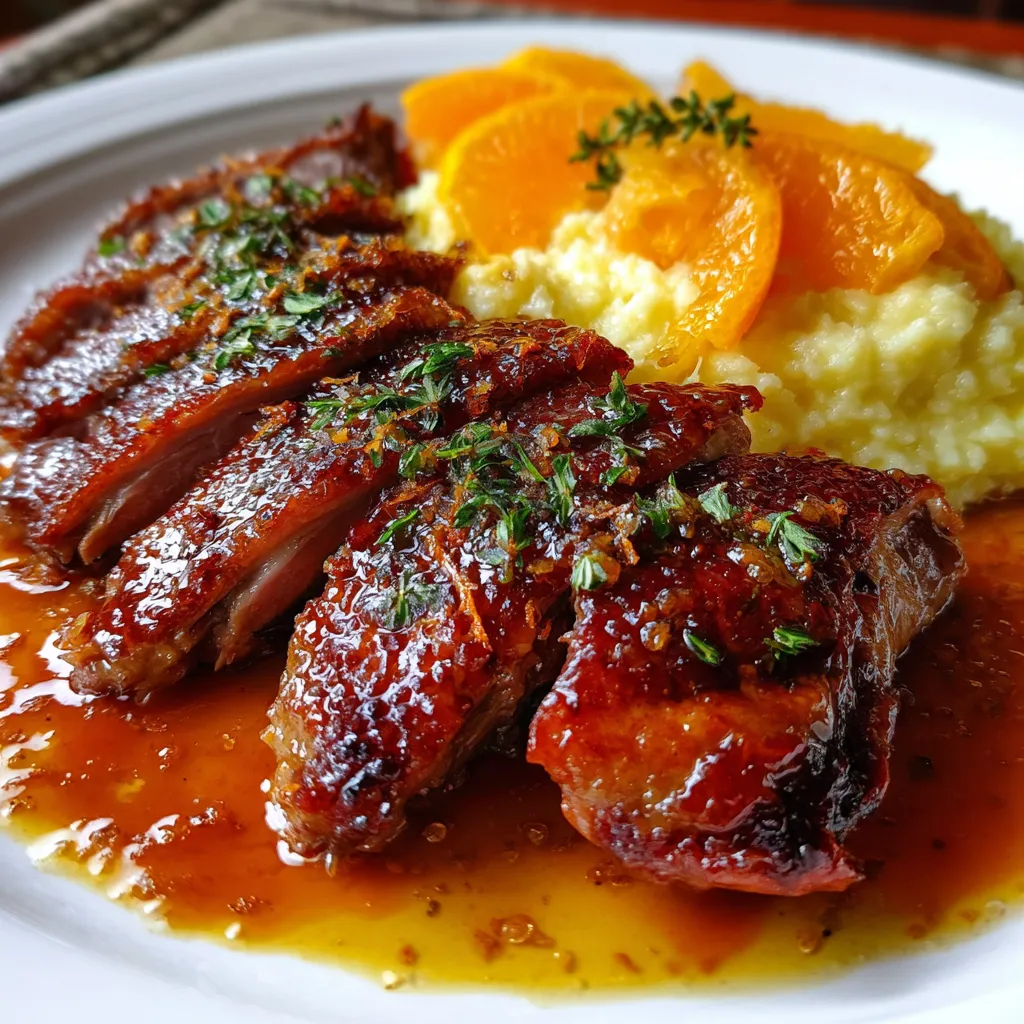

Duck A L’Orange
Description
Roasted until the skin crackles, each slice of duck is laced with a glossy orange sauce that balances honeyed sweetness and bright acidity, with hints of Grand Marnier to warm the palate.
Ingredients
Instructions
-
Preheat oven to 375°F (190°C).
-
Pat the duck dry and season evenly inside and out with salt and pepper.
-
Place the duck breast-side up on a rack in a roasting pan and roast for about 1 hour 30 minutes until the skin is crisp and the internal temperature reaches 165°F (74°C).
-
While the duck roasts, zest and juice the oranges to measure out the orange zest and juice.
-
In a small saucepan over medium heat, combine the sugar and white vinegar, stirring until the sugar dissolves and the mixture turns a light amber color.
-
Carefully add the orange juice and chicken stock, whisking to deglaze the pan, then bring to a gentle simmer.
-
Mix the cornstarch with water to form a slurry, stir it into the sauce, and simmer until the sauce thickens slightly.
-
Remove the pan from heat and whisk in the butter until melted and the sauce is glossy, then stir in the orange zest.
-
Let the duck rest for 10 minutes after roasting, carve, and serve with the orange sauce spooned over the top.
Note
- Prick the duck skin gently before roasting for extra crispiness.
- A splash of Grand Marnier can be added to the sauce for deeper orange flavor.
- Store any leftover sauce in the refrigerator for up to three days.
- Adjust the sugar and vinegar levels to balance sweetness and acidity to your taste.

