

Get ready to elevate your dinner game with High-Protein Honey Gochujang Chicken—a tangy honey and fiery gochujang glaze that transforms simple chicken into a sticky, protein-packed feast. This chicken sizzles in a sweet-spicy honey gochujang marinade, steaming off a caramelized, sticky sauce that clings to each tender bite. With a boost of Greek yogurt and a sprinkle of sesame seeds and green onions, every mouthful is juicy, flavorful, and perfect for fueling your day. Ready to dive in?
Key Ingredients
Before we jump into cooking, let's gather the essentials that make this dish shine:
- 500 g chicken breast: The lean, protein-packed star of the show that soaks up all the glaze.
- 2 tbsp gochujang: A Korean red chili paste that brings smoky heat and umami depth.
- 2 tbsp honey: Balances the spice with natural sweetness and creates a sticky glaze.
- 1 tbsp soy sauce: Adds savory saltiness and enhances the overall umami profile.
- 1 tbsp Greek yogurt: Provides extra protein, tenderizes the chicken, and adds a tangy note.
- 1 tbsp rice vinegar: Brightens the marinade with a mild, crisp acidity.
- 1 tsp sesame oil: Delivers a toasty, nutty aroma that rounds out the flavors.
- 2 cloves garlic, minced: Infuses pungent garlic flavor for an extra savory kick.
- 1 tsp grated ginger: Offers fresh zing and warmth to the marinade.
- 1 tbsp vegetable oil: Ensures a perfect sear by preventing sticking and promoting even browning.
- 1/2 tsp salt: Season’s the chicken and balances the sweet-spicy elements.
- 1/4 tsp pepper: Adds a subtle earthiness and a touch of heat.
- 1 tsp sesame seeds: Garnishes the finished dish with crunch and a toasty finish.
- 2 tbsp sliced green onions: Provides a fresh, mild onion flavor and vibrant color.
How To Make High-Protein Honey Gochujang Chicken
Let’s turn these ingredients into a mouthwatering, protein-rich dinner. You’ll create a perfectly balanced marinade, let the flavors meld, then sear and glaze the chicken for a caramelized finish. Follow each step closely and use medium-high heat for that irresistible golden crust before simmering the sauce to sticky perfection.
1. In a medium bowl, whisk together gochujang, honey, soy sauce, Greek yogurt, rice vinegar, sesame oil, minced garlic, grated ginger, salt, and pepper to create a smooth marinade that’s bursting with sweet, spicy, and tangy flavors.
2. Add the chicken breasts to the bowl and toss until each piece is well coated. Cover with plastic wrap and refrigerate for at least 30 minutes to allow the marinade to infuse fully.
3. Heat the vegetable oil in a large skillet over medium-high heat until shimmering. Place the chicken in the skillet and cook undisturbed for 5–6 minutes per side, or until each side is golden brown and the chicken is cooked through.
4. Reduce the heat to low and pour any remaining marinade into the skillet. Simmer for 2–3 minutes, stirring occasionally, until the sauce thickens into a glossy glaze.
5. Spoon the thickened sauce over the chicken, making sure each piece is well coated and the glaze is beautifully sticky.
6. Transfer the chicken to a serving plate and garnish generously with sesame seeds and sliced green onions for that final pop of flavor and color.
Serving Suggestions
This chicken shines on its own but pairs beautifully with simple sides. Here are four tasty ways to plate your High-Protein Honey Gochujang Chicken:
- Serve on a bed of steamed white or brown rice to soak up every drop of the sticky glaze.
- Accompany with a crisp green salad tossed in a light sesame-ginger vinaigrette for refreshing contrast.
- Plate alongside roasted broccoli or asparagus, drizzled with a splash of soy sauce and sesame oil.
- Wrap slices in warm tortillas with shredded lettuce and a dollop of yogurt for a fusion-style taco twist.
Tips For Perfect High-Protein Honey Gochujang Chicken
Nailing this recipe is all about timing and balance. Let’s make sure your chicken turns out juicy, perfectly glazed, and packed with flavor every single time.
- Marinate the chicken longer, up to 2 hours, for deeper flavor absorption.
- Adjust the amount of gochujang to control the spice level to your taste.
- Greek yogurt adds extra protein and tenderizes the chicken, ensuring a juicy bite.
- Serve with steamed rice or a crisp salad for a balanced high-protein meal.
How To Store It
Proper storage keeps your chicken juicy and the glaze intact. Follow these tips to maintain freshness and flavor:
- Refrigerate leftovers in an airtight container within two hours of cooking. They’ll stay fresh for up to 3 days.
- Store sauce separately if possible; this prevents the chicken from becoming soggy and helps retain that glossy glaze.
- Freeze portions in freezer-safe bags for up to 2 months. Thaw overnight in the fridge before reheating.
- Reheat gently on the stovetop over medium-low heat, adding a splash of water or extra sauce if needed to revive the glaze.
Frequently Asked Questions
Here are quick answers to the most common questions about this sticky chicken delight:
- Q: How long should I marinate the chicken, and can I marinate it longer for better flavor?
A: The recipe calls for marinating the chicken for at least 30 minutes to allow the gochujang, honey, soy sauce, Greek yogurt, rice vinegar, sesame oil, garlic, ginger, salt, and pepper to infuse. For deeper flavor absorption, you can marinate the chicken for up to 2 hours in the refrigerator. Avoid exceeding 3 hours, as the acidity from the vinegar and yogurt may begin to alter the chicken’s texture too much.
- Q: Can I use a different cut of chicken, such as thighs, and how would that affect cooking time?
A: Yes, you can substitute boneless, skinless chicken thighs for the breasts. Thighs tend to be more forgiving and yield a juicier result. Since thighs are typically thinner or more irregularly shaped, adjust your cooking time to about 4–5 minutes per side over medium-high heat. Ensure an internal temperature of 75°C (165°F) before removing from the skillet.
- Q: How can I adjust the spice level to suit my taste?
A: The gochujang provides moderate heat and deep umami flavor. To tone down the spice, reduce the gochujang by half or add an extra tablespoon of honey or Greek yogurt to the marinade. For a bolder kick, increase the gochujang to 3 tablespoons or stir in a pinch of red chili flakes when simmering the sauce. Taste the marinade before adding the chicken to ensure it meets your preferred heat level.
- Q: What are the best side dishes to serve with High-Protein Honey Gochujang Chicken?
A: This chicken pairs beautifully with steamed white or brown rice to soak up the sticky glaze. You can also serve it alongside a crisp green salad dressed with a light sesame-ginger vinaigrette for contrast. For extra protein and texture, roasted broccoli or edamame sautéed with garlic and a splash of soy sauce complement the chicken’s savory-sweet profile.
- Q: How do I know when the chicken is fully cooked without slicing into it?
A: Use a meat thermometer to check the internal temperature of the thickest part of the chicken breast. It should read 75°C (165°F). If you don’t have a thermometer, press the chicken gently with a spatula: fully cooked chicken will feel firm and the juices should run clear, without any pink showing on the surface.
- Q: Can I prepare the sauce ahead of time and reheat it later?
A: Yes, you can mix the marinade ingredients (gochujang, honey, soy sauce, Greek yogurt, rice vinegar, sesame oil, garlic, ginger, salt, and pepper) into a sauce up to a day in advance. Store it in an airtight container in the refrigerator. When ready to cook, marinate the chicken as directed and follow the cooking steps. If you have leftover cooked sauce, reheat it gently in a skillet over low heat until it thickens to a glaze consistency.
- Q: What is the best way to store and reheat leftovers without losing the sticky glaze?
A: Store leftover chicken and sauce separately in airtight containers in the refrigerator for up to 3 days. When reheating, place the chicken in a skillet over medium-low heat, add the sauce, and cover for a few minutes to steam and warm through. Stir occasionally so the glaze remains sticky and evenly coats the chicken. Avoid using a microwave, as it can make the glaze runny and affect texture.
What Makes This Special
This High-Protein Honey Gochujang Chicken brings together sweet, spicy, and tangy flavors in a sticky, caramelized glaze that’s as fun to eat as it is easy to make. The Greek yogurt boost keeps every bite juicy while adding extra protein, making it perfect for busy weeknights or meal prep. Feel free to print and save this recipe, then slide into the comments if you’ve got questions, conquered that glaze, or just want to share your own flavor twists!
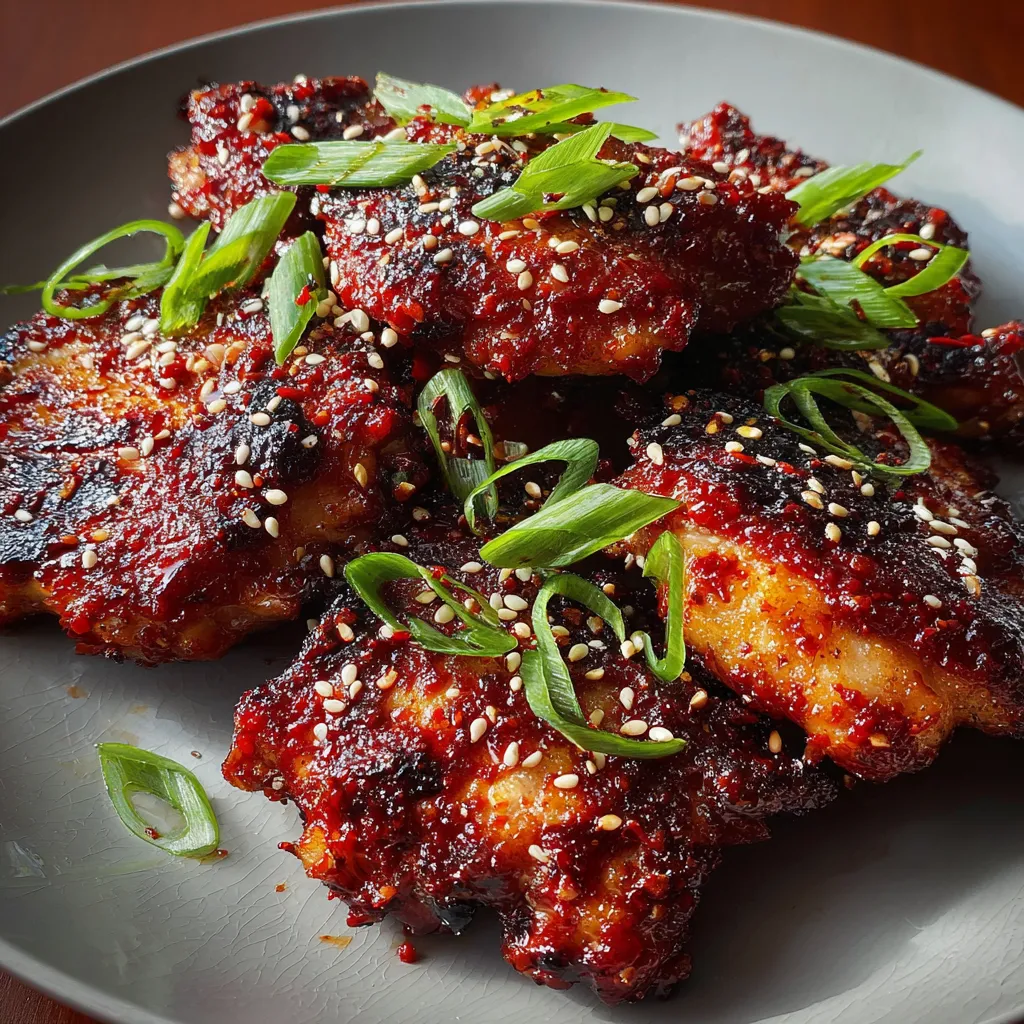

High-Protein Honey Gochujang Chicken
Description
This chicken sizzles in a sweet-spicy honey gochujang marinade, steaming off a caramelized, sticky sauce. Each bite is tender and juicy, boosted with Greek yogurt tang and crowned with sesame seeds and green onions.
Ingredients
Instructions
-
In a bowl combine gochujang, honey, soy sauce, Greek yogurt, rice vinegar, sesame oil, garlic, ginger, salt and pepper to create a marinade.
-
Add chicken to the marinade and toss to coat evenly. Cover and refrigerate for at least 30 minutes.
-
Heat vegetable oil in a large skillet over medium-high heat. Add chicken and cook for 5–6 minutes per side until golden and cooked through.
-
Lower the heat and simmer any remaining marinade in the skillet for 2–3 minutes until it thickens.
-
Spoon the thickened sauce over the chicken, ensuring each piece is well coated and the glaze is sticky.
-
Transfer chicken to a serving plate and garnish with sesame seeds and sliced green onions.
Note
- Marinate the chicken longer, up to 2 hours, for deeper flavor absorption.
- Adjust the amount of gochujang to control spice level to your taste.
- Greek yogurt adds extra protein and tenderizes the chicken.
- Serve with steamed rice or a crisp salad for a balanced high-protein meal.

