

Sticky Korean Chicken Skewers deliver tender chicken cubes glazed in a spicy-sweet gochujang marinade, charred to perfection on the grill, and finished with nutty sesame seeds and crisp green onion ribbons. With bold layers of soy sauce, honey, garlic, and ginger, each bite is a harmonious blend of sticky, smoky, and vibrant flavors that will have you craving more. Whether you’re firing up the grill for a casual dinner or impressing friends at a backyard cookout, this recipe is your ticket to Korean-inspired bliss.
Key Ingredients
To create these irresistible skewers, you’ll need a handful of pantry staples and fresh aromatics. Each ingredient plays a crucial role in building that signature sticky glaze and tender texture:
- 500 grams boneless chicken thighs: Juicy, flavorful meat that holds up beautifully to intense grilling.
- 3 tablespoons soy sauce: Provides savory umami depth and a salty backbone for the marinade.
- 2 tablespoons gochujang paste: Delivers spicy-sweet Korean chili heat and vibrant red color.
- 2 tablespoons honey: Balances the spice with natural sweetness and helps achieve a glossy caramelized finish.
- 1 tablespoon sesame oil: Adds a toasty, nutty aroma that complements the chili flavors.
- 1 tablespoon rice vinegar: Brings a mild tang that brightens the marinade and tenderizes the meat.
- 1 tablespoon brown sugar: Boosts caramelization and enhances the marinade’s richness.
- 3 cloves garlic, finely minced: Infuses the chicken with pungent, aromatic sharpness.
- 1 teaspoon fresh ginger, grated: Offers a warm, zesty kick to balance the sweet and savory notes.
- 8 bamboo skewers, soaked in water: Prevents burning and ensures ease of grilling.
- 1 teaspoon sesame seeds: Adds a light crunch and visual contrast on each skewer.
- 2 stalks green onions, sliced: Provides a fresh, oniony finish and bright pop of color.
How To Make Sticky Korean Chicken Skewers
Get ready to take a flavor journey through Korea’s beloved spicy-sweet palette. This recipe guides you from prepping bite-sized chicken to layering on that signature glaze, then finishing each skewer to golden-char perfection. Marinating infuses each piece, while careful grilling seals in juices and builds those irresistible charred edges.
1. Cut the chicken thighs into 2.5–3 cm bite-sized pieces and place them in a large mixing bowl to ensure even coating.
2. Whisk together soy sauce, gochujang paste, honey, sesame oil, rice vinegar, brown sugar, garlic, and ginger in a separate bowl until the mixture is fully smooth and glossy.
3. Pour the marinade over the chicken, then use your hands or a spoon to toss each piece so it’s evenly coated. Cover the bowl and refrigerate for at least 30 minutes—up to 2 hours for deeper flavor penetration.
4. Thread the marinated chicken onto the soaked bamboo skewers, leaving about 1 cm of space between each chunk so heat circulates evenly.
5. Preheat a grill or grill pan over medium-high heat and brush the grates or pan surface lightly with oil to prevent sticking.
6. Grill the skewers for 4–5 minutes per side, turning carefully and basting occasionally with any leftover marinade. Watch for a slight char around the edges and ensure the chicken is cooked through.
7. Remove from heat, then immediately sprinkle the skewers with sesame seeds and sliced green onions. Serve while piping hot for maximum stickiness and flavor.
Serving Suggestions
These Sticky Korean Chicken Skewers shine when paired thoughtfully. Here are a few ideas to elevate your meal and present them like a pro:
- Steamed Jasmine Rice with a drizzle of the reserved glaze for a classic, comforting base that soaks up every drop of sauce.
- Crisp Lettuce Wraps where you nestle a skewer inside a lettuce leaf, top with pickled carrots, and wrap for a refreshing handheld bite.
- Cold Soba Noodle Salad tossed in a light sesame dressing, offering contrast in texture and a cooling counterpoint to the warm skewers.
- Quick Kimchi Slaw combining shredded cabbage, carrots, and a tangy kimchi-style dressing for a spicy-crunchy sidekick that echoes the Korean theme.
Tips For Perfect Sticky Korean Chicken Skewers
Mastering these skewers is all about timing and balance. Keep your approach relaxed, and you’ll turn out juicy, charred, finger-licking morsels every time:
- Soak bamboo skewers for at least 30 minutes to prevent burning during grilling.
- Adjust the gochujang and honey ratio to control spice level and sweetness precisely to your taste.
- Boneless, skinless chicken thighs give the juiciest results but breasts can be used with careful timing to avoid overcooking.
- If you don’t have a grill, broil the skewers on high for 3–4 minutes per side to mimic that charred finish indoors.
How To Store It
These skewers are great for meal prep or leftovers—and knowing how to store them properly keeps that signature texture and flavor intact. Let them cool slightly before packing away:
- Refrigerate in an airtight container once the skewers reach room temperature. They’ll stay fresh for up to 3 days and retain their sticky glaze.
- Freeze on a baking sheet laid flat for about an hour, then transfer to a freezer bag; thaw overnight in the fridge before reheating.
- Reheat gently on a low-heat grill pan or in a 180 °C (350 °F) oven to preserve juiciness and revive that char.
- Keep garnishes separate—store sesame seeds and green onions in a small container and sprinkle just before serving to maintain crispness.
Frequently Asked Questions
Here are some common queries to help you nail these skewers every time:
- How long should I marinate the chicken for optimal flavor and texture?
The recipe calls for a minimum of 30 minutes in the fridge to allow the flavors to penetrate. For a deeper, more pronounced taste and tender texture, marinate up to 2 hours. Avoid exceeding 2 hours, as the acidity from the rice vinegar may begin to break down the chicken excessively and affect its bite.
- What is the safest way to use leftover marinade for basting without risking contamination?
Before tossing the chicken in marinade, reserve about 2 tablespoons of the raw mixture in a separate bowl. Once cooking begins, bring this reserved marinade to a rolling boil in a small saucepan for at least 1 minute to kill any bacteria. Then use it to baste the skewers midway through grilling. Discard any marinade that has touched raw chicken.
- How can I prevent bamboo skewers from burning or catching fire on the grill?
Soak your bamboo skewers in water for at least 30 minutes before threading the chicken. This moisture will absorb heat and reduce charring. Additionally, position the skewers so their ends don’t extend directly over hot coals, and turn them often to avoid prolonged exposure to flames.
- Can I substitute chicken breasts for thighs, and what adjustments are needed?
Yes, boneless chicken breasts can be used, but they are leaner and cook faster. Cut breast meat into consistent 2.5–3 cm pieces, then grill for approximately 3 to 4 minutes per side over medium-high heat. Monitor closely to prevent drying out, and check that the internal temperature reaches 75 °C (165 °F).
- What is the best way to tell when the chicken is fully cooked on the skewers?
Look for clear juices running from the chicken and slightly charred edges. You can also use an instant-read thermometer: insert it into the center of a piece—chicken is safe at 75 °C (165 °F). If you don’t have a thermometer, cut into the thickest piece to ensure the meat is opaque with no pink center.
- How can I adapt this recipe if I don’t have access to an outdoor grill?
Preheat your oven’s broiler on high and place the skewers on a foil-lined baking sheet about 10 cm (4 inches) from the heat source. Broil for 3–4 minutes per side, keeping a close eye to prevent burning. Alternatively, use a heavily oiled grill pan on the stovetop over medium-high heat, grilling for 4–5 minutes per side similar to outdoor instructions.
- How do I adjust the spice and sweetness of the marinade to suit my taste?
To reduce heat, decrease the gochujang by 1 tablespoon or increase the honey by 1 additional tablespoon. For extra spiciness, add a pinch of Korean chili flakes (gochugaru) or an extra teaspoon of gochujang. Always whisk the marinade and taste a small spoonful before adding raw chicken to fine-tune the balance.
What Makes This Special
Sticky Korean Chicken Skewers hit all the right notes: a bold gochujang kick, honeyed sweetness, aromatic garlic and ginger, plus that irresistible char from the grill. They’re perfect for backyard gatherings or a cozy weeknight dinner when you crave something exciting. The balance of heat, sweet, and umami ensures every bite is a flavor bomb. Don’t forget to print or bookmark this recipe so you can revisit it whenever the craving strikes. Let me know in the comments how your skewers turned out or if you have any burning questions—I’m here to help!
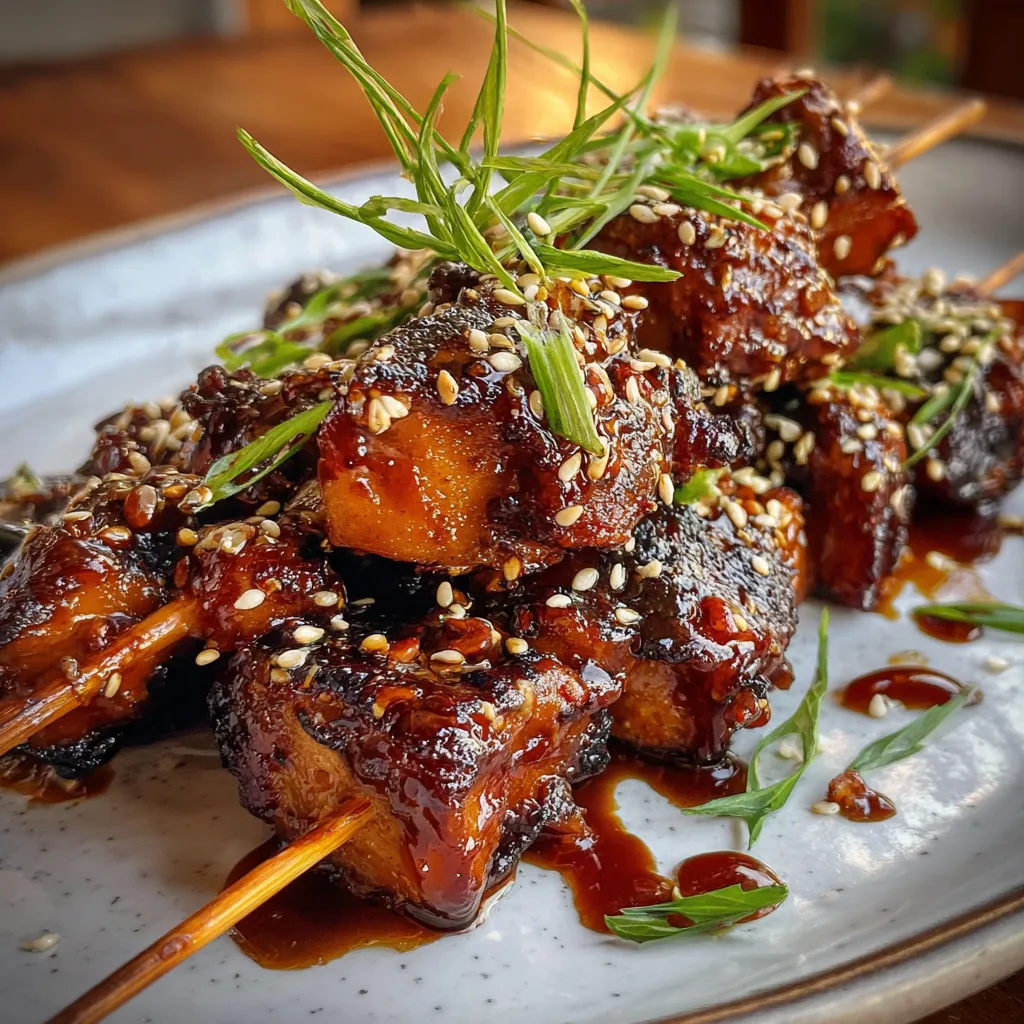

Sticky Korean Chicken Skewers
Description
Boneless chicken thighs soak up a bold blend of gochujang, honey, garlic, and ginger, then caramelize on the grill. Each skewer arrives sticky, smoky, and studded with sesame seeds and bright green onion ribbons.
Ingredients
Instructions
-
Cut the chicken thighs into 2.5–3 cm bite-sized pieces and place in a mixing bowl.
-
In a separate bowl, whisk together soy sauce, gochujang paste, honey, sesame oil, rice vinegar, brown sugar, garlic, and ginger until smooth.
-
Pour the marinade over the chicken pieces, toss to coat evenly, cover, and refrigerate for at least 30 minutes (up to 2 hours for deeper flavor).
-
Thread the marinated chicken onto the soaked bamboo skewers, leaving a little space between each piece.
-
Preheat a grill or grill pan over medium-high heat and lightly oil the grates or pan surface.
-
Grill the skewers for 4–5 minutes per side, basting occasionally with any leftover marinade, until the chicken is charred at the edges and cooked through.
-
Remove skewers from the heat, sprinkle with sesame seeds and sliced green onions, and serve immediately.
Note
- Soak bamboo skewers for at least 30 minutes to prevent burning during grilling.
- Adjust the gochujang and honey ratio to control spice level and sweetness.
- Boneless, skinless chicken thighs give the juiciest results but breasts can be used with careful timing.
- If you don’t have a grill, broil the skewers on high for 3–4 minutes per side.

